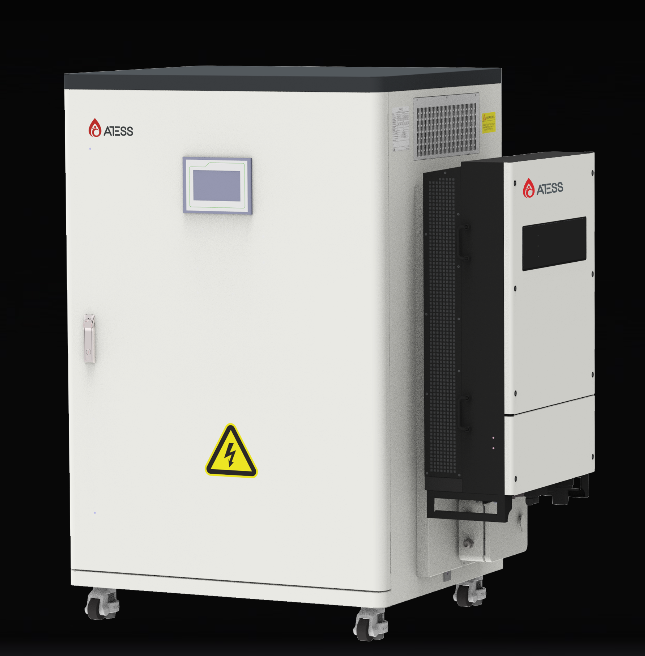
A 50kVA inverter is often chosen by businesses that aim to maintain stable and reliable electricity for their daily operations. Many companies using solutions from Atess look for systems that balance energy usage with backup capability, ensuring essential equipment remains functional under varying grid conditions. A 50kVA inverter can typically support loads such as refrigeration units, office electronics, ventilation systems, communication devices, and small production machines. These power demands commonly appear in shops, schools, retail areas, and manufacturing workshops, where both a 30kw inverter and a 50kw inverter help maintain steady performance throughout the day.
Hybrid Solutions for Business, Industry, and Agriculture
The HPS30000TL/40000TL/50000TL Hybrid Inverter series combines power generation, storage, control, and backup functions into a single system designed for commercial environments. They develop these models to meet the requirements of both grid-connected and off-grid scenarios, allowing small businesses to operate with greater energy flexibility. In business districts, a 30kw inverter supports essential loads such as lighting and refrigeration. In factories, a 50kw inverter maintains production continuity by powering machinery, control panels, and ventilation during grid disturbances. On agricultural sites, a 30kw inverter can keep pumps, barns, and communication devices running independently where the grid is weak or unavailable.
Practical Load Capacity of a 50kVA Unit
A 50kVA inverter, along with a 50kw inverter in comparable applications, provides sufficient capacity for a wide range of medium-scale commercial loads when matched properly with operational needs. Commonly supported equipment includes air-conditioning units, cold-storage systems, computers, network servers, and emergency backup circuits. Their hybrid systems offer fast transition performance, which helps protect sensitive equipment from disruptions.
Conclusion
A 50kVA inverter can reliably carry essential commercial and light-industrial loads when integrated into a suitable hybrid system. With proper configuration, shops, factories, and farms can maintain consistent power availability in both grid-connected and off-grid conditions, ensuring that critical equipment continues operating smoothly throughout the day.
