Artificial intelligence is rapidly influencing how laboratories conduct molecular diagnostic testing and interpret results. As clinical workloads increase and data streams become more complex, AI-assisted interpretation tools are emerging to support technicians and clinicians working with advanced equipment such as the diagnostic analyzer. Integrating intelligent software with physical instruments can help streamline workflows, reduce subjective variability, and improve the clarity of outputs generated by these systems. These tools add depth to analytical interpretation without introducing ambiguity into diagnostic reporting.
The Role of AI in Diagnostic Interpretation
AI-driven interpretation tools are designed to work alongside laboratory instruments by processing raw data, identifying patterns, and highlighting key findings that may not always be evident at first glance. In the context of clinical diagnostics, such systems often rely on machine learning models trained on vast datasets that reflect diverse biological conditions. These models can assist in recognizing subtle signal differences, suggesting probable outcomes, and flagging anomalies for review. While AI does not replace human judgment, it functions as an interpretive companion that complements the output of a diagnostic analyzer and reduces the cognitive load on laboratory personnel. Early adoption in imaging and genomics has demonstrated that intelligent interpretation can enhance efficiency and assist in standardizing results across multiple operators.
Practical Applications in Molecular Diagnostic Testing
In molecular diagnostic testing environments, AI tools can support a range of tasks from quality control assessment to nuanced result interpretation. For example, when a high-throughput result set arrives from a run, AI-enhanced software may help categorize results, identify outliers, and generate reports in formats that are easier to communicate with clinicians. Integration with data transmission systems also helps align instrument outputs with laboratory information systems (LIS) and hospital information systems (HIS). When combined with modern instruments such as the EDAN CL30, these capabilities can help laboratories handle increased test volumes with greater consistency.
EDAN CL30 Supporting Intelligent Diagnostic Output
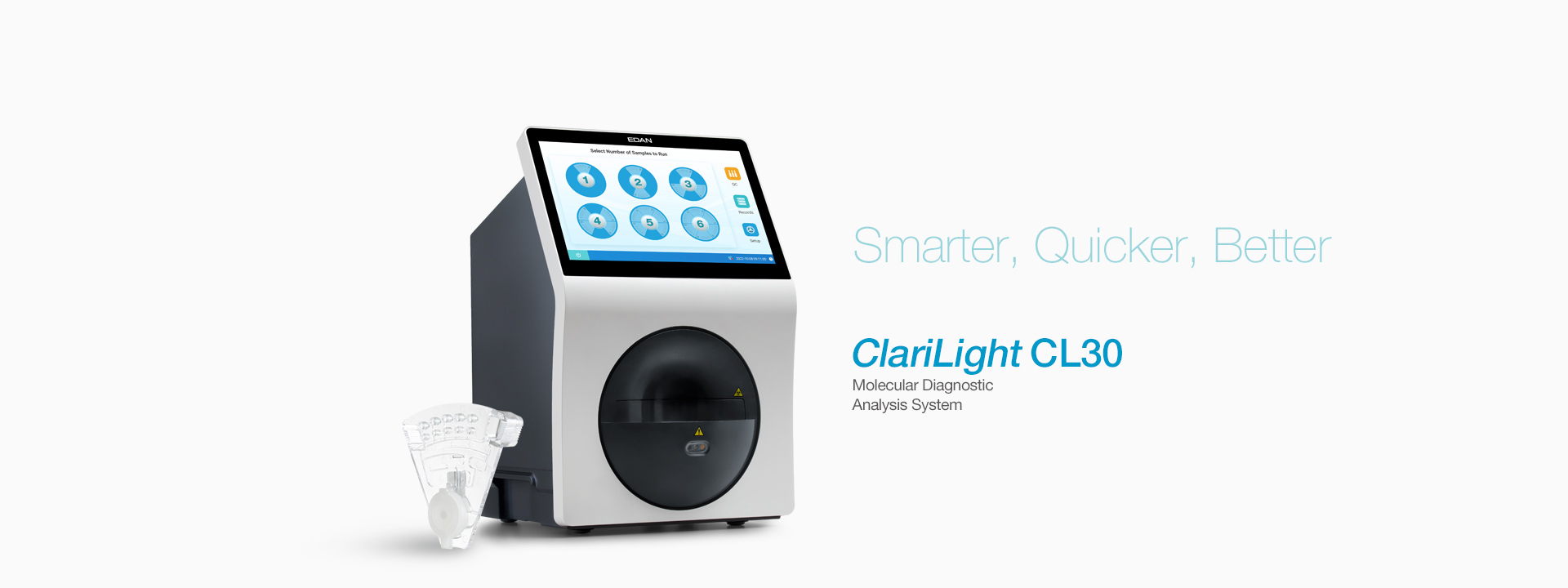
The EDAN CL30 is a diagnostic analyzer designed for fast, extraction-free molecular analysis and supports synchronized data transmission to LIS/HIS systems. Its intuitive interface and connectivity features create an environment in which AI-assisted interpretation tools can be effectively applied, ensuring that test results feed smoothly into downstream analytics and reporting platforms.
Conclusion
AI-assisted interpretation tools are becoming an integral part of the molecular testing landscape, helping laboratories maximize the value of their molecular diagnostic testing workflows. By pairing intelligent software with robust instruments like the EDAN CL30, clinical teams can elevate the clarity and efficiency of their diagnostic processes, making data interpretation more consistent and actionable.
