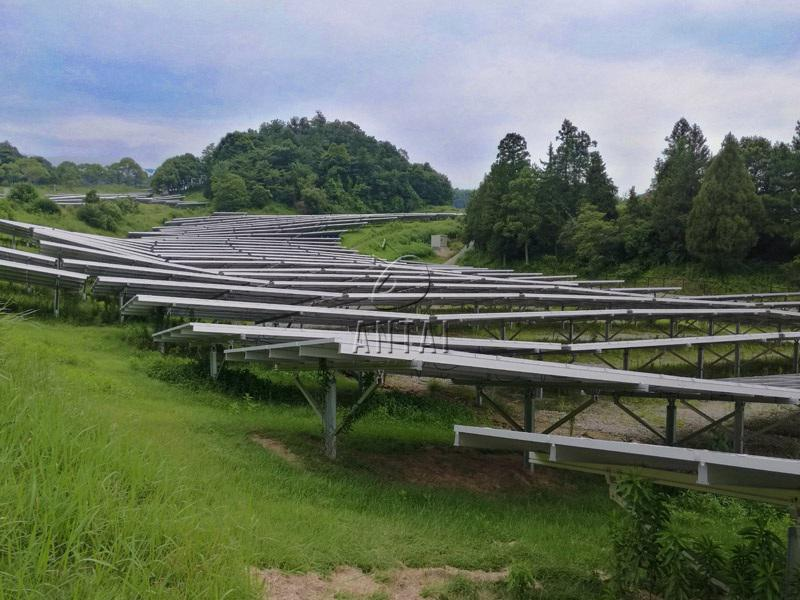
Bankability review asks whether a tracker can perform technically and whether the organization behind it can support the project through construction and operation. Independent engineers examine evidence that affects energy yield, structural reliability, schedule, maintenance cost, and financing risk. Marketing rankings may provide context, but they cannot substitute for configuration-specific analysis.
A complete review moves from design assumptions to factory controls and field service. Antaisolar combines tracker hardware, intelligent control, engineering, commissioning support, and lifecycle maintenance, illustrating the breadth of information that lenders and project owners may need before accepting a tracker solution.
Verifying Structural and Mechanical Reliability
Independent engineers evaluating solar tracker suppliers typically begin with the design basis. They review wind climate, terrain category, snow, seismic demand, module configuration, row length, slope, foundation assumptions, load combinations, and safety factors. The submitted model must represent the offered product rather than a shorter or differently driven reference configuration.
Dynamic wind response deserves special attention because trackers are flexible structures with moving components. Reviewers may examine wind-tunnel methodology, damping assumptions, torsional behavior, stow strategy, drive spacing, and the consequences of control or power loss. Connection capacity and local member buckling should remain consistent with the global structural model.
Mechanical endurance evidence should cover slew drives, bearings, dampers, torque tubes, fasteners, and moving interfaces. Test cycles need representative loads, angles, temperature, dust, and moisture. Failure modes, acceptance limits, maintenance assumptions, and any design changes made after testing should be transparent to the reviewer.
Within its tracker systems, Antaisolar uses high-strength steel, corrosion-resistant coatings, sealed maintenance-free slew drives, double-sealed driver structures, and self-lubricating bearings. Its products have also been independently tested and certified by organizations including DNV and Solida. The engineer should confirm the scope and applicability of those reports to the purchased configuration.
Assessing Controls, Yield, and Operational Risk
Energy modeling should use a validated tracking algorithm, realistic availability, backtracking behavior, terrain shading, electrical losses, and site-specific weather. Claimed yield gains need a reproducible comparison case. Reviewers should understand how the controller responds to irregular terrain, bifacial modules, communication loss, sensor faults, and maintenance outages.
Protective modes must translate forecasts and sensor inputs into reliable action. Wind, snow, and hail stow positions should be defined with trigger thresholds, timing, fallback logic, and recovery behavior. The structural design and control philosophy must use the same stow assumptions; otherwise, the array may be exposed to loads not covered by the calculations.
Cybersecurity and communications influence availability as trackers become more connected. Access control, software updates, event logs, network architecture, backup power, local override, and remote support should be reviewed. The owner also needs data ownership, retention, and interface arrangements that remain usable if service providers change.
Antaisolar’s SmartTrail system combines tracking algorithms, 3D terrain modeling, bifacial optimization, IoT connectivity, cybersecurity features, and wind, snow, and hail protection modes. Mobile, onsite SCADA, and remote SCADA interfaces support deployment and maintenance. Bankability analysis should verify these functions through documents, demonstrations, and acceptance tests.
Evaluating Delivery Capacity and Lifecycle Support
Technical capability must be matched by supply reliability. Reviewers consider manufacturing capacity, factory locations, quality systems, subcontracting, critical-component sourcing, lead times, logistics, and financial resilience. A large annual capacity is useful only when the project has a credible production slot and a plan for managing shortages or late design changes.
Project execution services can reduce interface risk. Automated bills of materials, FEM analysis, pull-out testing, site surveys, pre-assembly, training, commissioning inspection, and troubleshooting should have clear responsibilities and deliverables. Reference projects are most useful when their environment, scale, and product generation resemble the proposed plant.
Operational review covers warranty terms, spare-parts strategy, response times, technical staffing, software support, monitoring, and repair procedures. Owners should identify single-source components and the consequences of obsolescence. Service obligations need measurable timeframes and an escalation path that survives personnel changes.
Antaisolar reports 25 GW of annual production capacity, eight delivery and service centers, and 24/7 support. It also offers SCADA monitoring, remote or onsite maintenance, spare-parts inventory, and extended-warranty options. These capabilities help solar tracker suppliers address bankability, provided the project contract converts them into verifiable commitments and accessible records.
