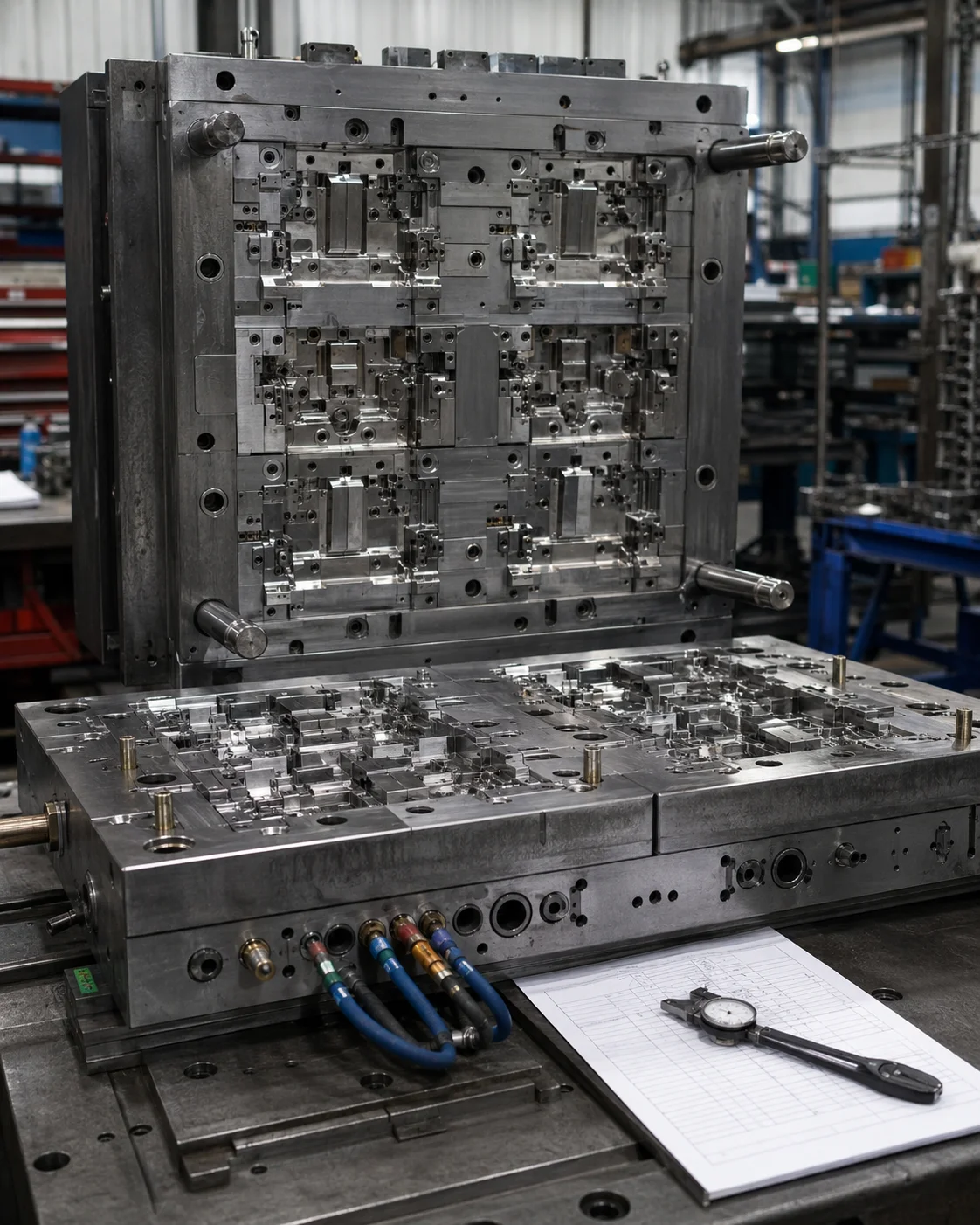
When a plastic component will be seen, touched, or evaluated directly by customers, appearance becomes part of the product specification. Gloss level, texture, polish, color consistency, weld lines, gate marks, and surface reproduction can all affect the final impression.
This raises an important question: Can aluminum rapid tooling produce cosmetic plastic parts with a production-quality appearance?
The answer is yes, provided that the tooling material, mold surface, machining process, resin, and molding conditions are considered together. Aluminum rapid tooling is not limited to rough functional prototypes. With proper engineering and finishing, it can support many cosmetic applications while reducing tooling time and initial investment.
Why Aluminum Matters for Cosmetic Injection Molding
Aluminum is widely used for rapid tooling because it can be machined efficiently and transfers heat effectively during injection molding. HordRT uses aluminum 7075 among its rapid tooling materials, with tooling material selected according to mold life, resin, part geometry, and surface requirements.
For cosmetic parts, the advantage is not simply faster machining. A well-designed aluminum insert can reproduce carefully prepared mold surfaces and support consistent molding conditions during prototype, validation, bridge production, and low-volume manufacturing.
However, the final appearance does not come from aluminum alone. The quality of the cavity surface is critical. A smooth cavity can produce a smoother molded surface, while a controlled textured cavity can reproduce the intended visual and tactile effect.
This makes surface preparation an essential part of aluminum rapid tooling.
Polishing and Gloss: How Smooth Can the Surface Be?
High-gloss plastic parts require careful control of the mold cavity. Machining marks, tool paths, scratches, EDM characteristics, and polishing direction can potentially appear on the molded surface.
For applications requiring a smooth or glossy appearance, the aluminum cavity can be CNC machined and subsequently polished to the required level. HordRT lists polishing as a standard mold surface option for smooth or glossy surfaces and reviews appearance requirements during DFM and mold design.
The key is to define the desired appearance before machining begins. Instead of simply requesting a “smooth finish,” it is more practical to specify the expected gloss level, visible area, texture standard, and critical cosmetic zones.
This allows the tooling team to determine how the cavity should be machined and finished before the first mold trial.
Texture and EDM Finish for More Than Just Appearance
Not every cosmetic component needs a mirror-like surface. Matte finishes, fine textures, and technical patterns are frequently used to control reflections, improve grip, or create a particular visual identity.
Aluminum rapid tooling can accommodate different surface treatments depending on the part requirements. HordRT provides as-machined, polished, bead-blasted, and EDM-textured mold surfaces, with options including matte, semi-gloss, fine texture, and custom texture for molded parts.
EDM can be particularly useful when a controlled technical texture is required. The resulting surface can influence both appearance and tactile characteristics. For a cosmetic housing, for example, a carefully specified texture may help reduce the visibility of minor handling marks compared with an extremely glossy surface.
The important consideration is consistency. Texture should be designed as part of the mold rather than treated as a secondary operation after molding.
Surface Reproduction Starts With Mold Design
Even a highly polished cavity cannot compensate for an unsuitable part or mold design.
Parting lines, gate locations, ejector positions, draft angles, wall thickness, and potential warpage can all influence the appearance of a molded component. HordRT’s DFM process specifically reviews these factors before tooling, while T1 trials are used to evaluate molded parts and optimize the tool when necessary.
Gate placement is especially important for visible surfaces. A poorly positioned gate may leave a visible gate mark or contribute to flow-related cosmetic defects. Similarly, inadequate draft can make ejection difficult and potentially damage a textured or polished cavity.
For this reason, cosmetic requirements should be communicated together with CAD data rather than added after the mold has already been manufactured.
When Should You Choose Aluminum Rapid Tooling?
Aluminum rapid tooling is particularly practical when appearance needs to be evaluated before committing to a higher-investment production mold.
It can support design verification, functional testing, market-launch quantities, and low-volume manufacturing while using production-grade thermoplastics. HordRT’s rapid tooling service supports materials such as ABS, PC, PC/ABS, PP, PMMA, PBT, TPU, and other production resins.
For products such as consumer electronics housings, diagnostic device enclosures, appliances, handles, covers, and other visible plastic components, this approach allows teams to evaluate both appearance and function using molded parts rather than relying only on prototypes made through unrelated processes.
For extremely demanding optical surfaces, highly abrasive materials, very high production volumes, or long-term mass production, however, steel tooling may be more appropriate. Tool selection should ultimately reflect the required mold life, resin, geometry, cosmetic specification, and production quantity.
Why Choose HordRT for Aluminum Rapid Tooling?
HordRT combines rapid tooling, injection molding, DFM analysis, mold trials, and inspection within one manufacturing workflow. Its rapid tooling service uses customer-specific aluminum or pre-hardened steel inserts with shared or dedicated mold bases, helping reduce tooling investment while maintaining a production-oriented molding process.
Its engineering process covers DFM review, mold design, CNC machining, EDM, fitting, assembly, T1 sampling, and inspection. HordRT also reports more than 1,800 mold sets of annual tooling capacity, over 100 precision machines and tooling equipment, and a typical rapid tooling lead time of 5–10 days depending on project requirements.
For cosmetic applications, this integrated workflow is particularly useful because surface finish cannot be separated from mold design, machining, molding, and inspection.
Turning Cosmetic Requirements Into Molded Results
Aluminum rapid tooling can produce attractive cosmetic plastic parts when the process is engineered around the appearance requirement from the beginning. Polishing, gloss, texture, EDM finish, cavity machining, resin selection, gating, and molding parameters all contribute to the final result.
The right question is therefore not simply whether aluminum can produce cosmetic parts, but whether the entire tooling process is designed to reproduce the required surface consistently.
With DFM support, precision machining, controlled mold finishing, T1 validation, and injection molding under one workflow, HordRT provides a practical route for teams that need to evaluate both the appearance and performance of molded plastic parts before moving into long-term production.
